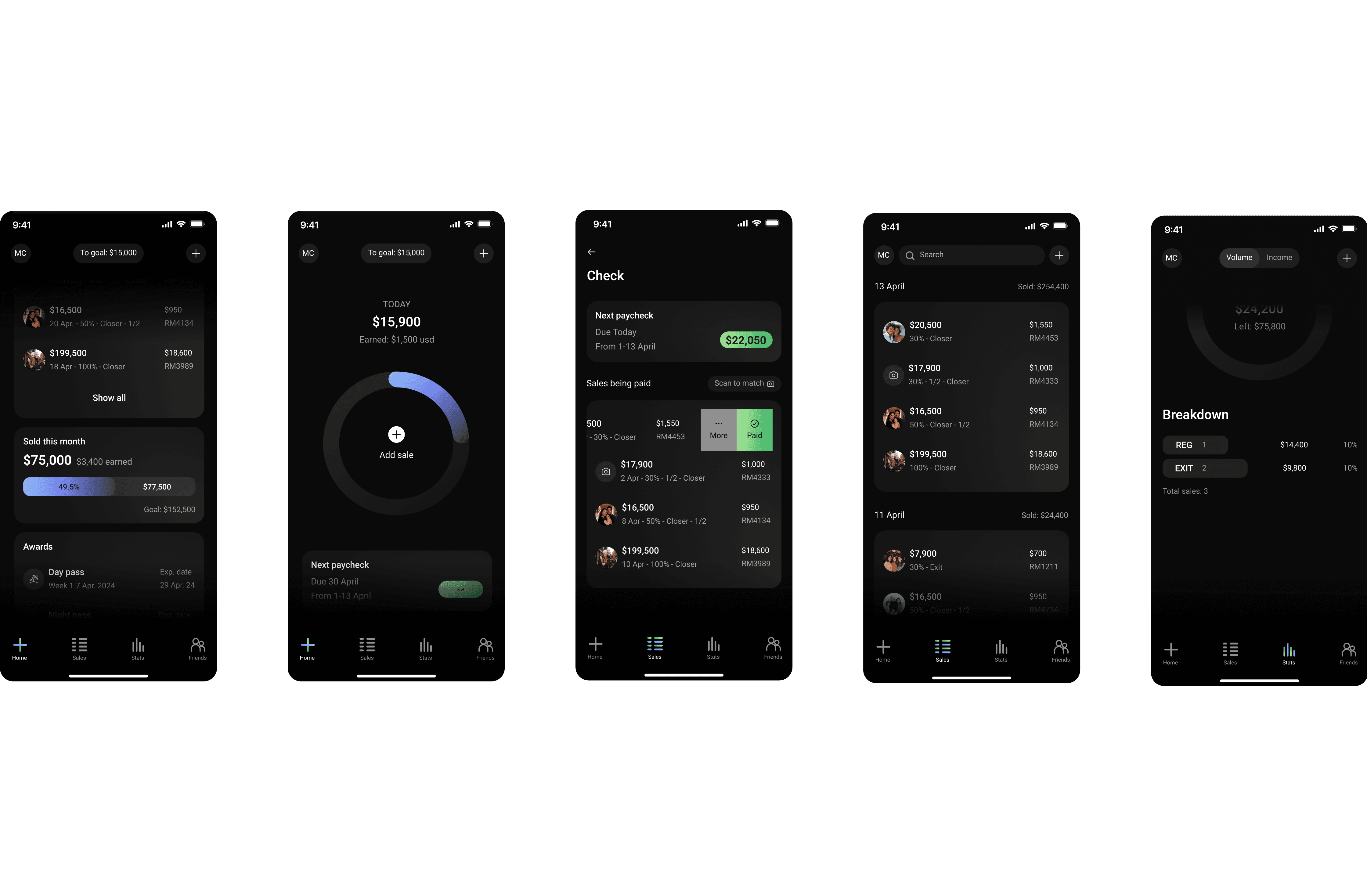
Helping salespeople gain control over their earnings.
While working in sales, I noticed a common problem among my colleagues: despite working hard, most of us had little clarity about how much we would earn on our
next paycheck, even though our salary was only commission based.
A complex commission system, combined with disorganized processes, made it time-consuming and stressful to keep track of sales and income. Financial uncertainty created unnecessary pressure and hiring an accountant was often too expensive for many reps.
Partnering with a colleague, we decided to take action. Without any formal UX or UI training at the time, we created an iOS app built by salespeople, for salespeople. Giving them an easier way to track their commissions, forecast earnings, and gain financial control, all from the palm of their hand.
My role
Co-Founder
Product Design
Competitive Analysis
UX/UI
Prototyping
Brand Alignment
Company
Sales Tracker (2019)


Simplicity as a guiding principle
Our approach was simple: build something easy to use, customizable, and tailored to the real day-to-day needs of our sales team.
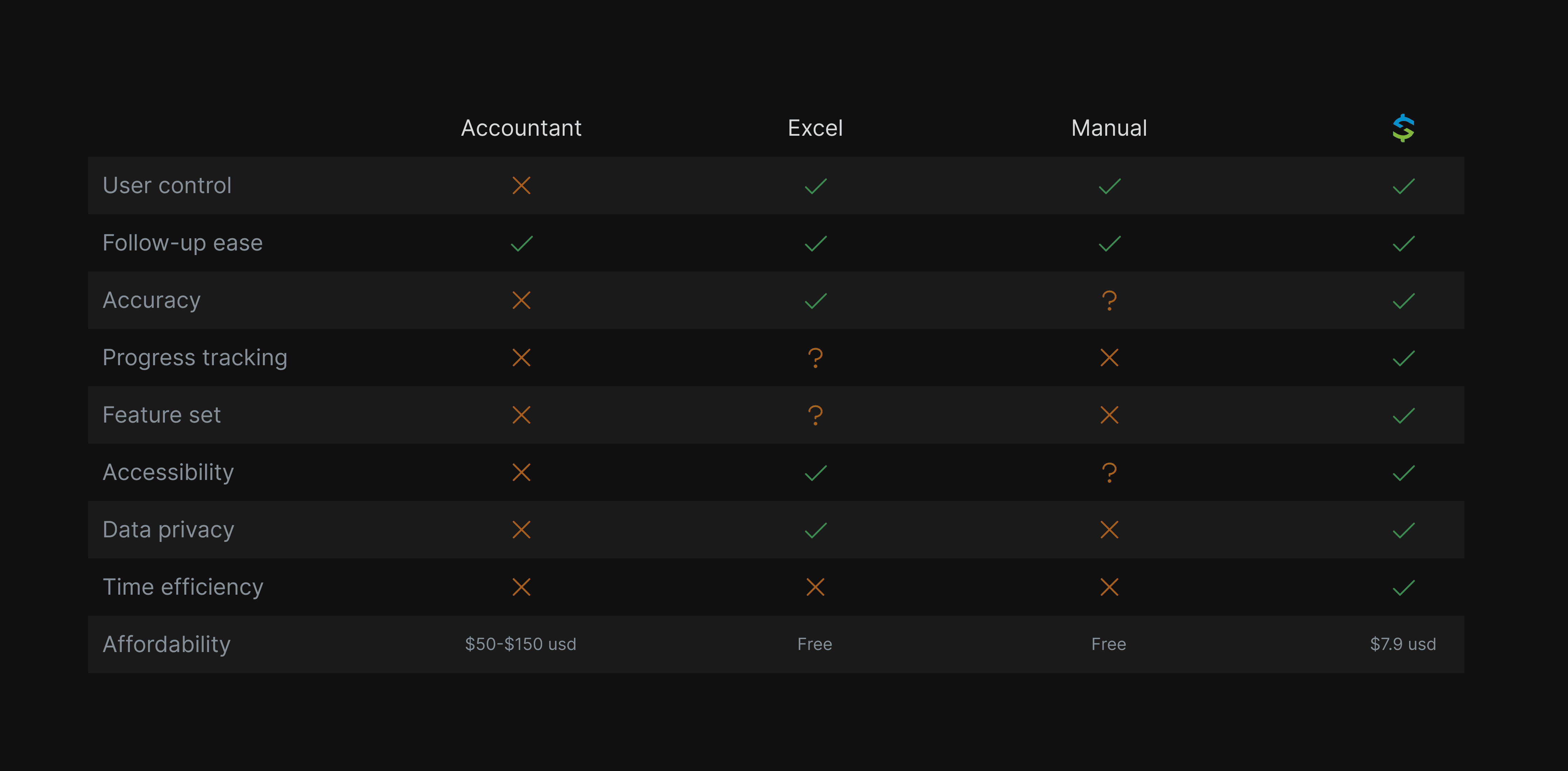
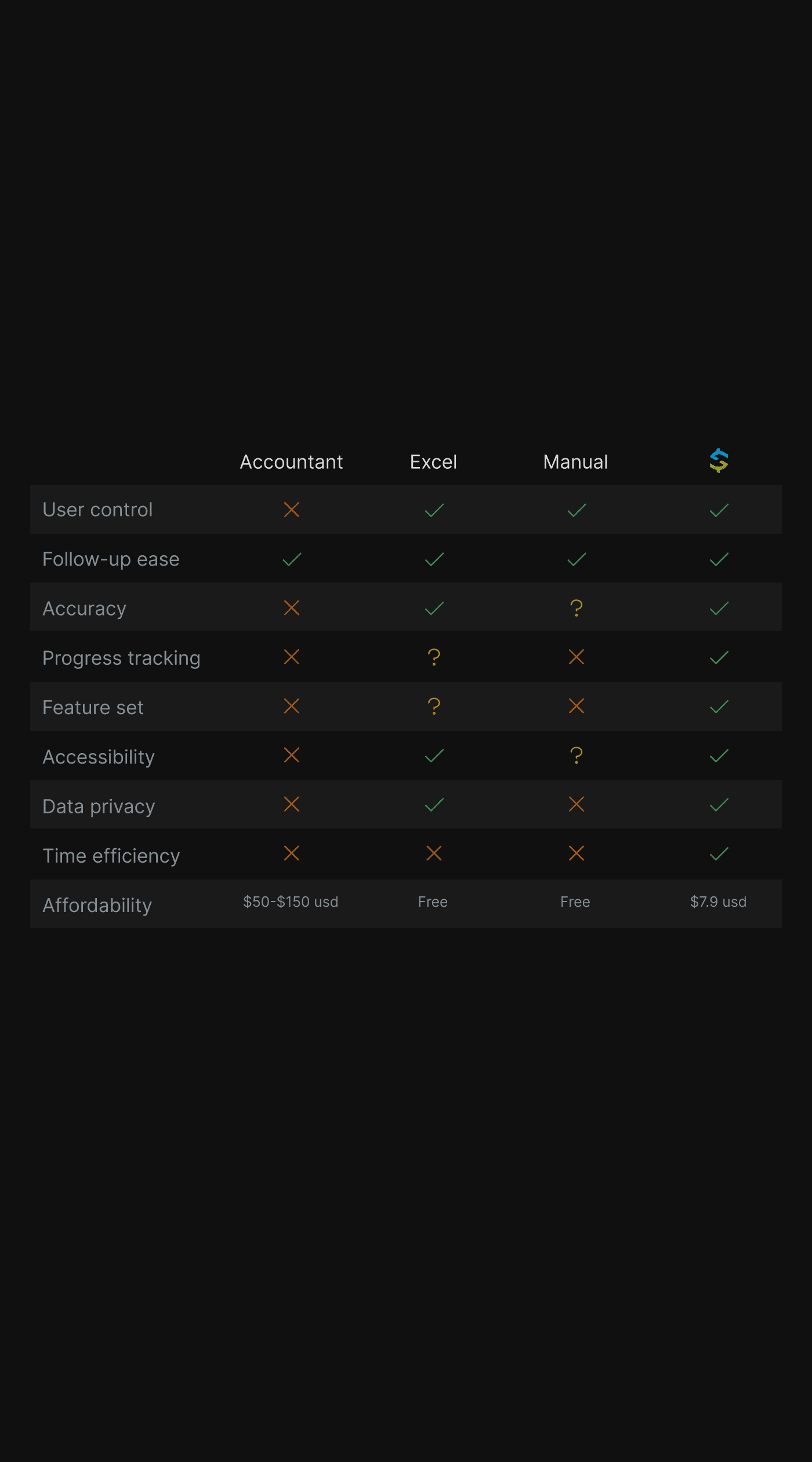
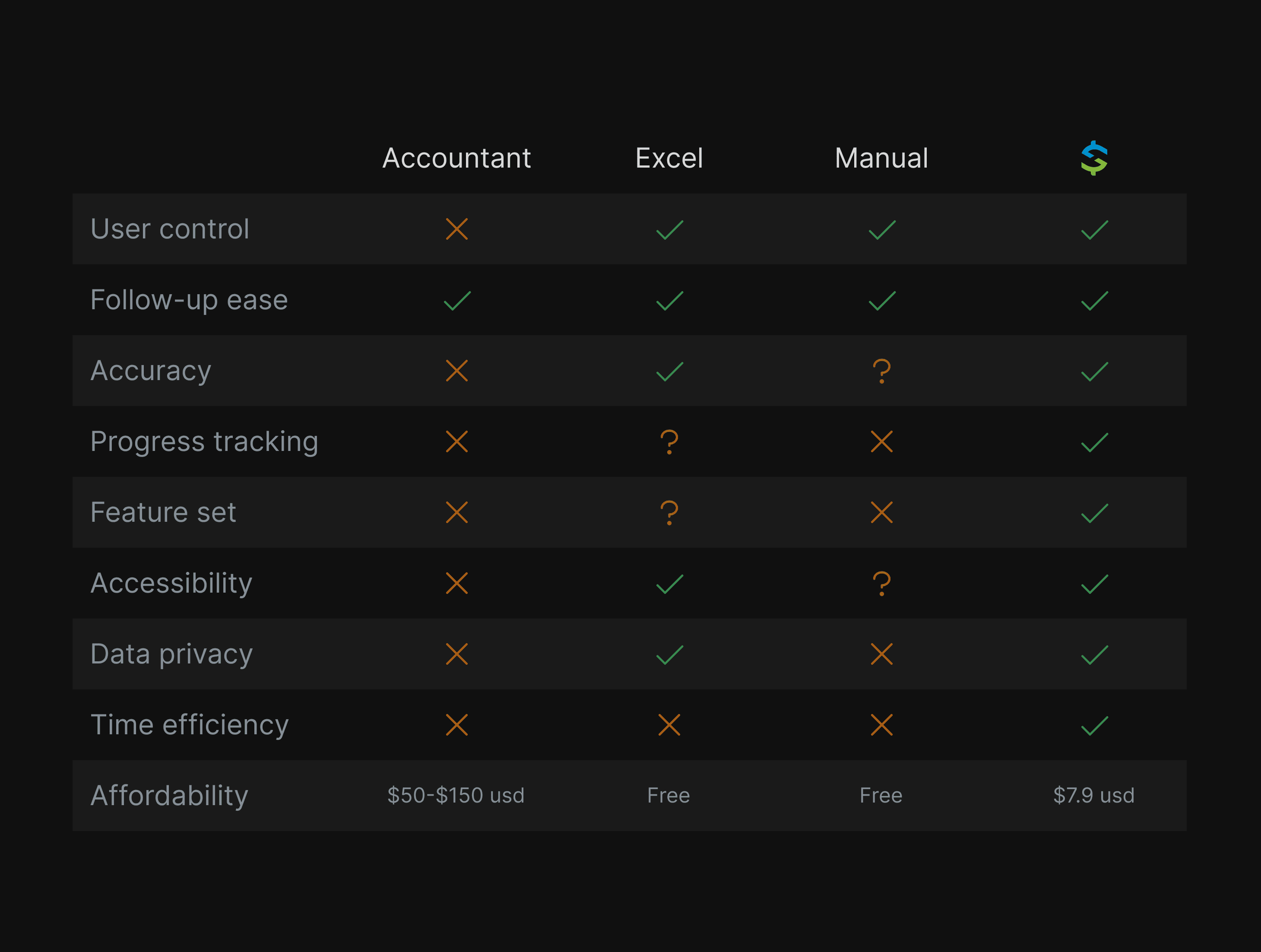
Nothing like this.
We started with competitor research and realized most apps were too complex or too generic for our niche. Our users needed something faster, clearer, and less demanding of their attention.
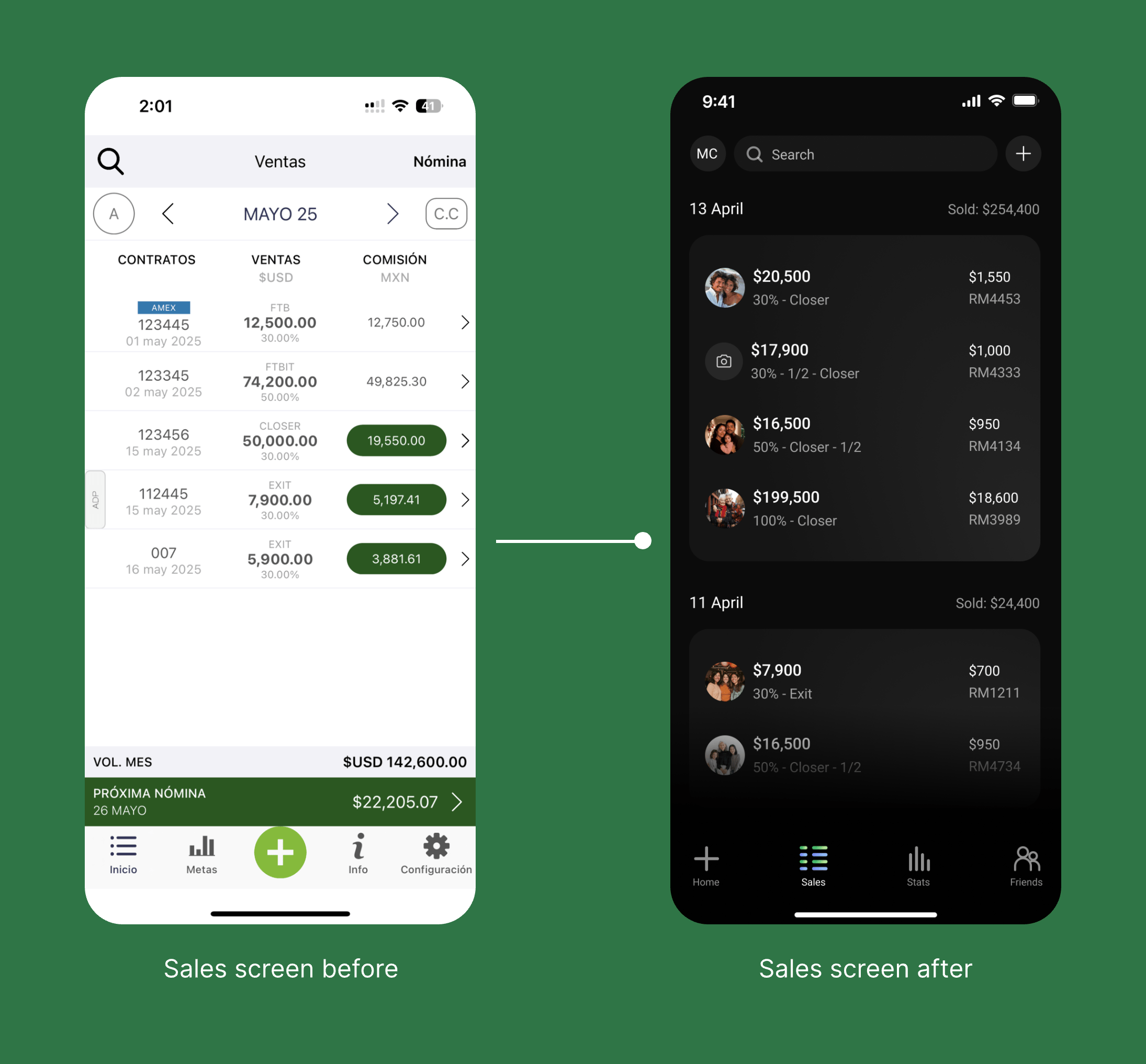
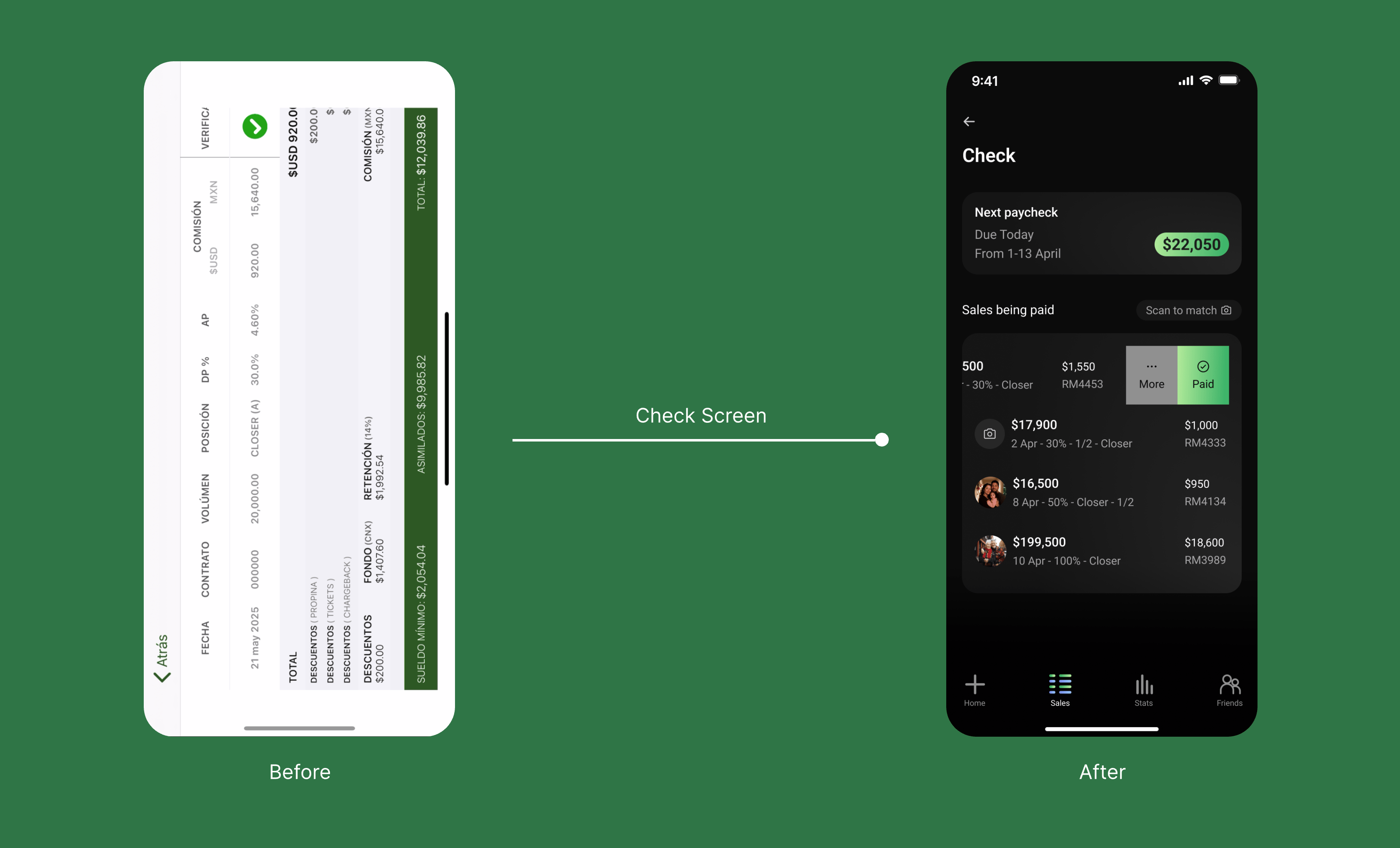
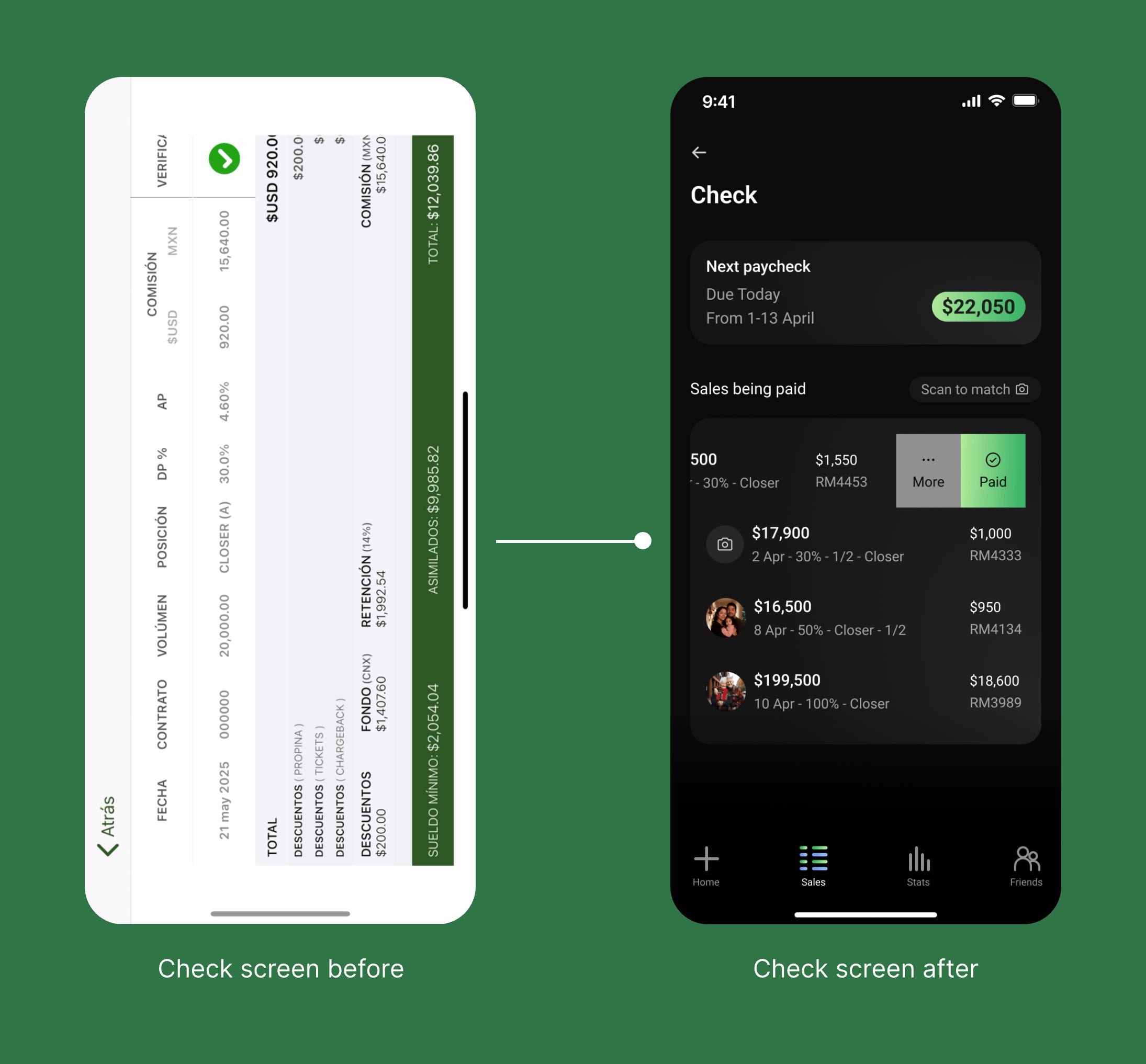
Key feature 1
Automatic
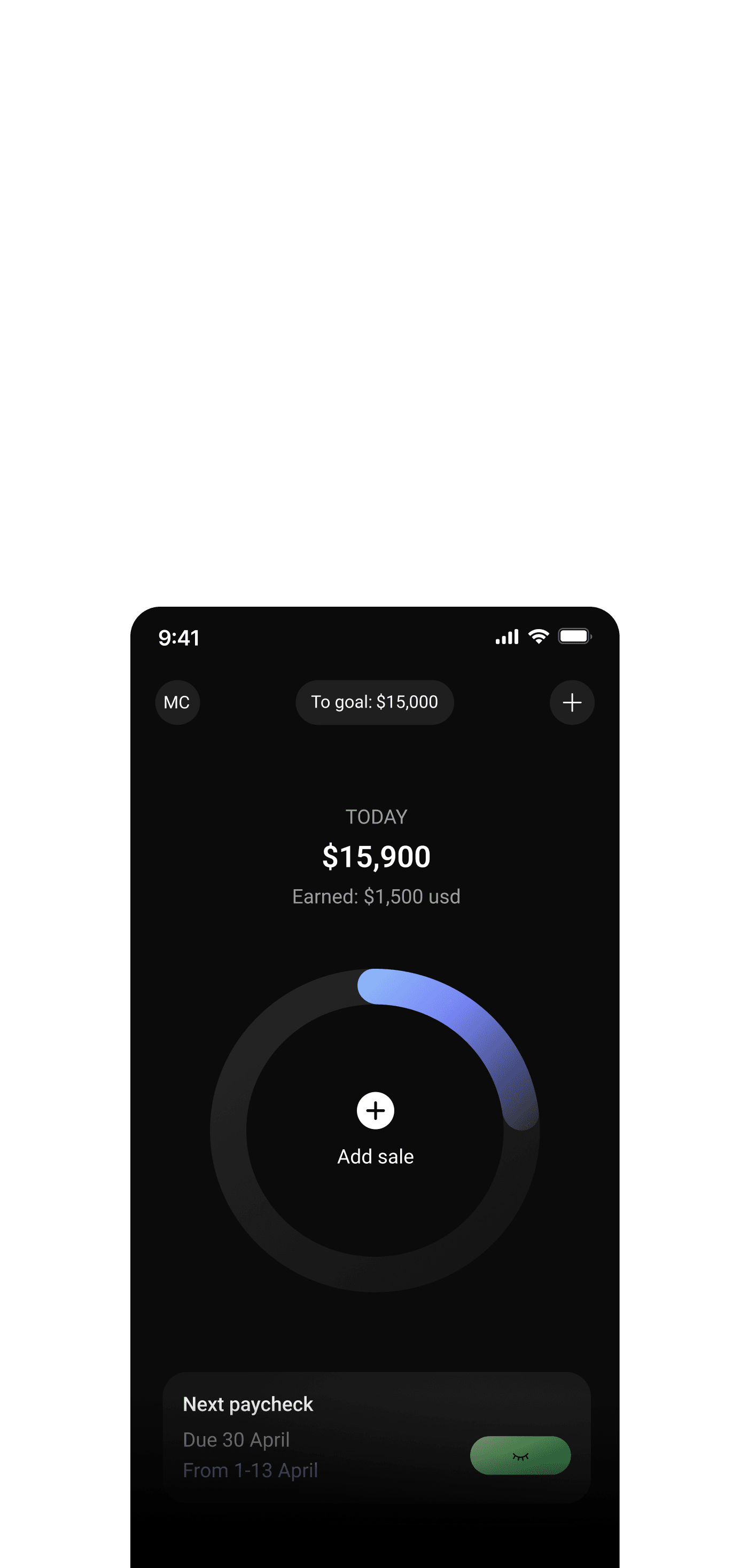
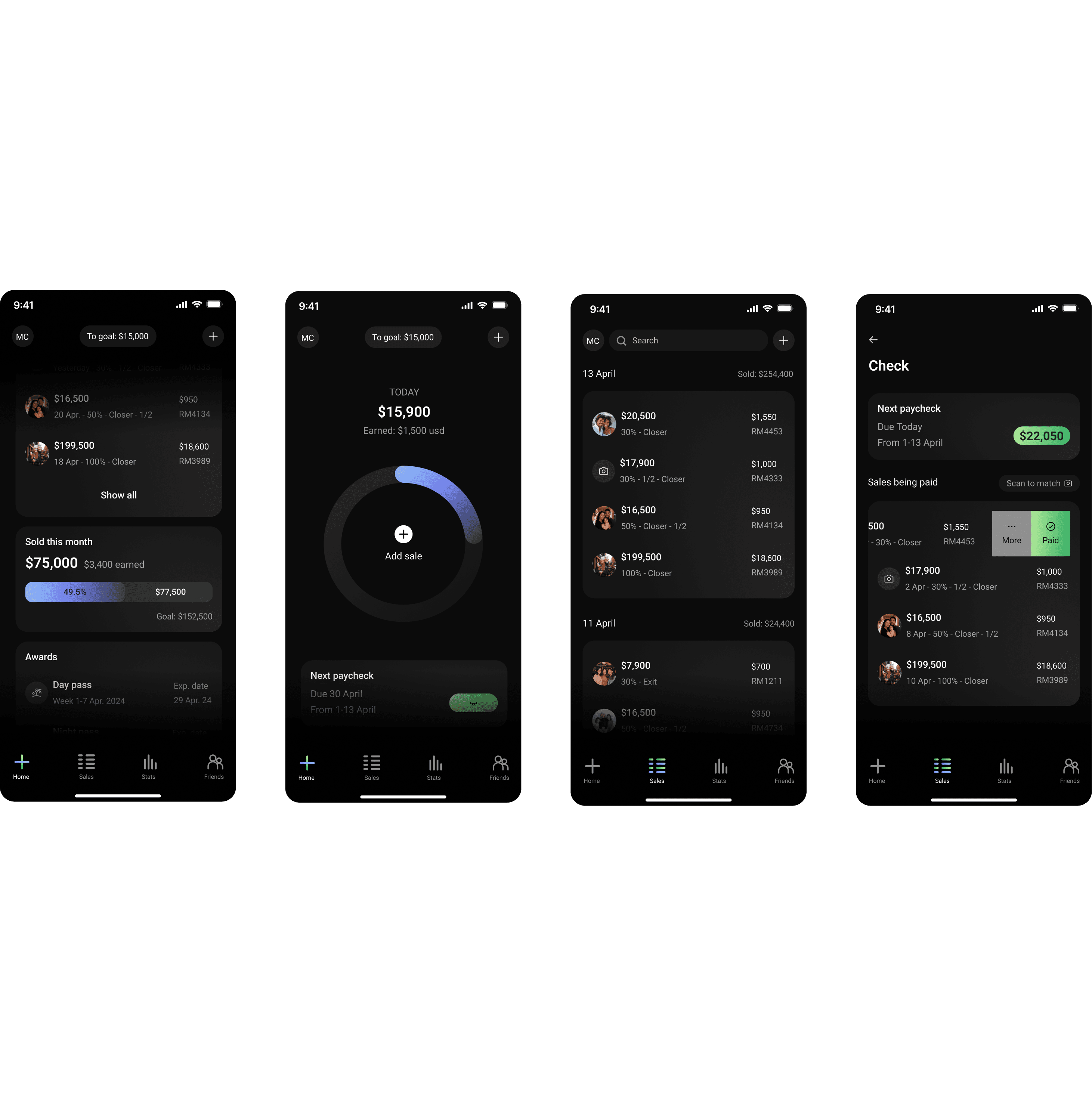
Enter a sale and instantly see when and how much you’ll earn, factoring in company payout schedules.
Key feature 2
Progress tracking
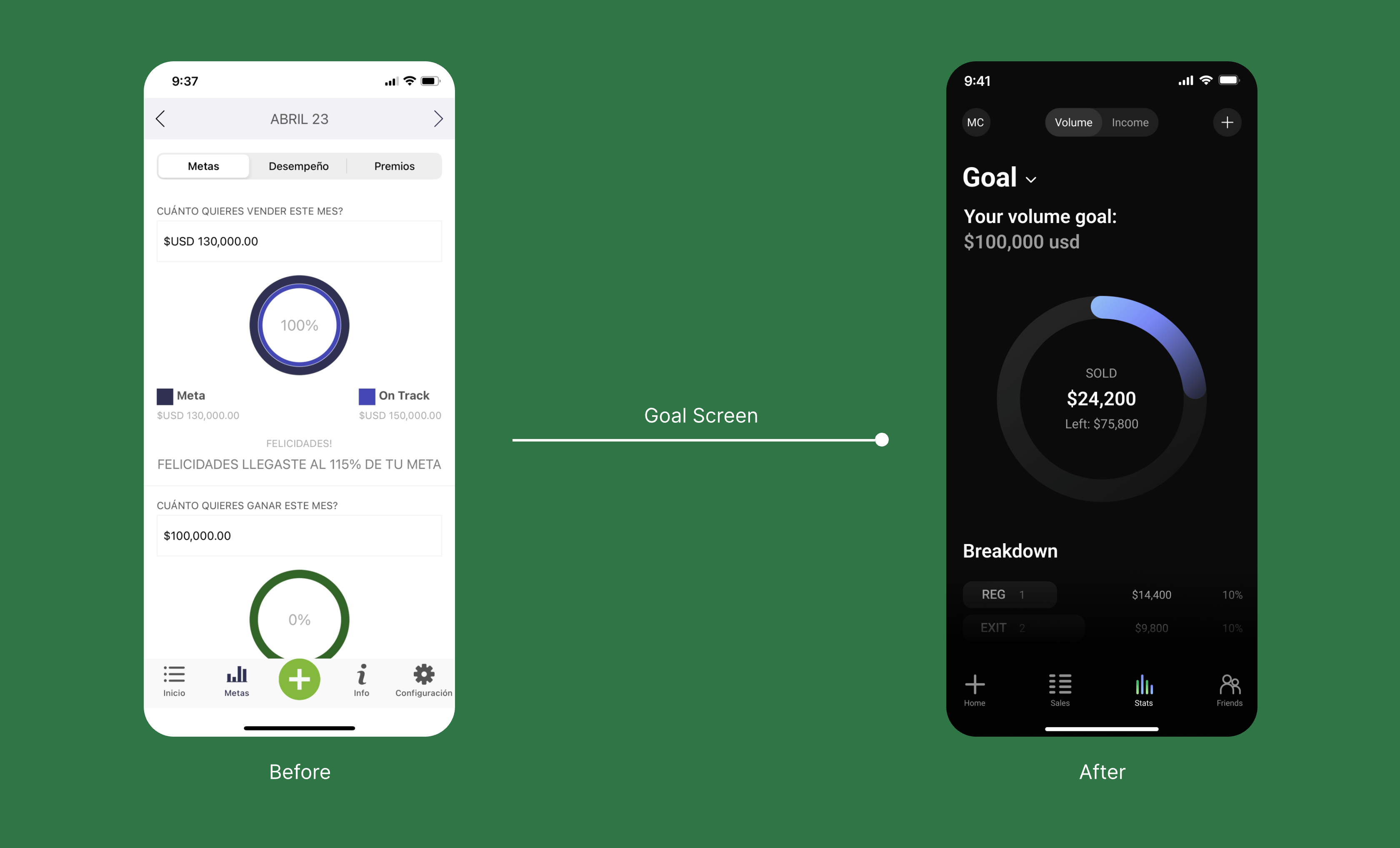
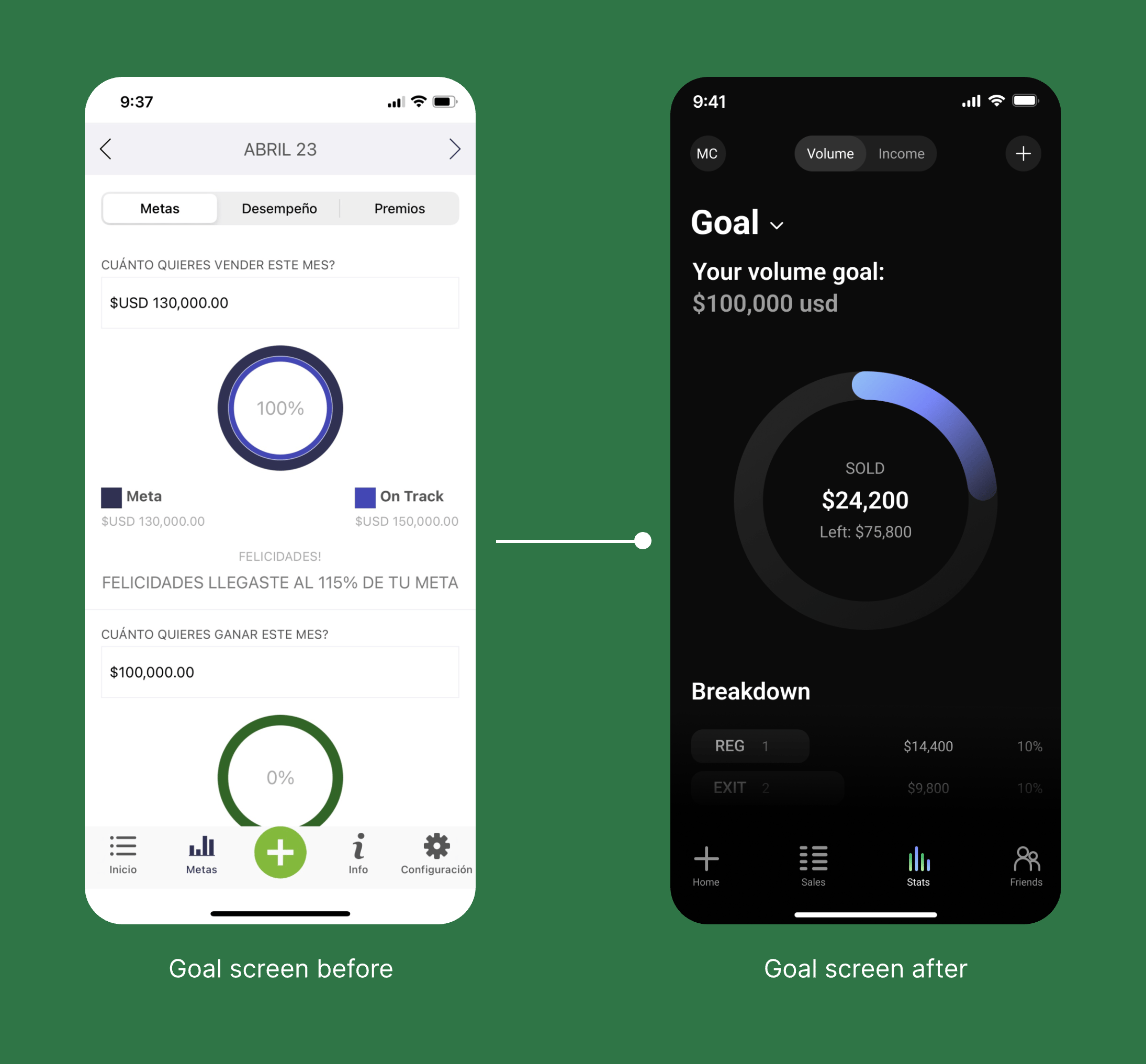
Visualize sales volume and income goals to stay motivated.
Key feature 3
Payment verification
Cross-check pay slips against sales data to ensure accuracy.
User-first, always.
We kept the visual design clean, focused, and easy to navigate, knowing our users were often impatient, busy, and easily distracted.
Although we skipped formal UX processes like wireframing or design systems at the time, our focus on listening to real needs kept the
product grounded.
Impact 1
Fast adoption
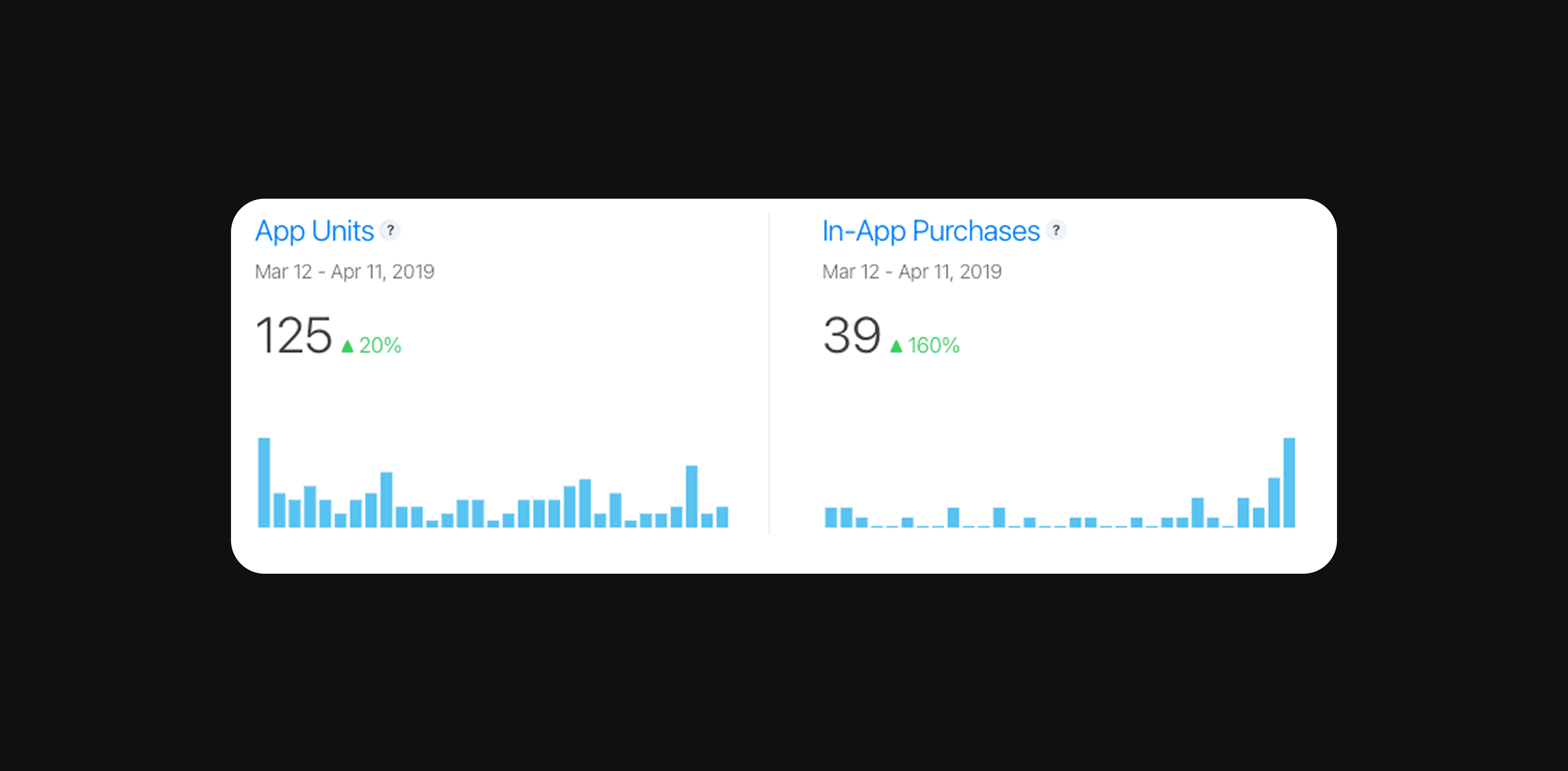
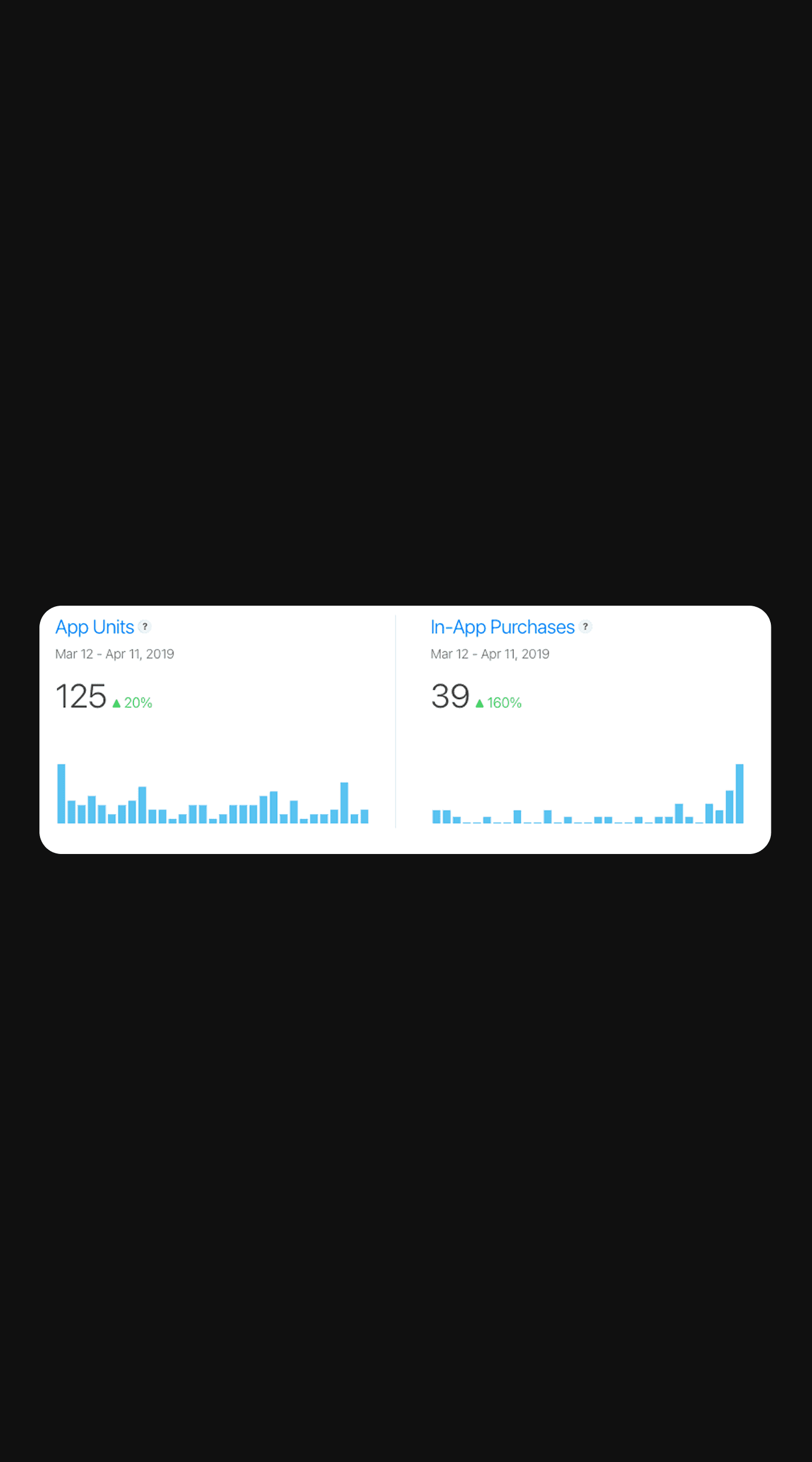
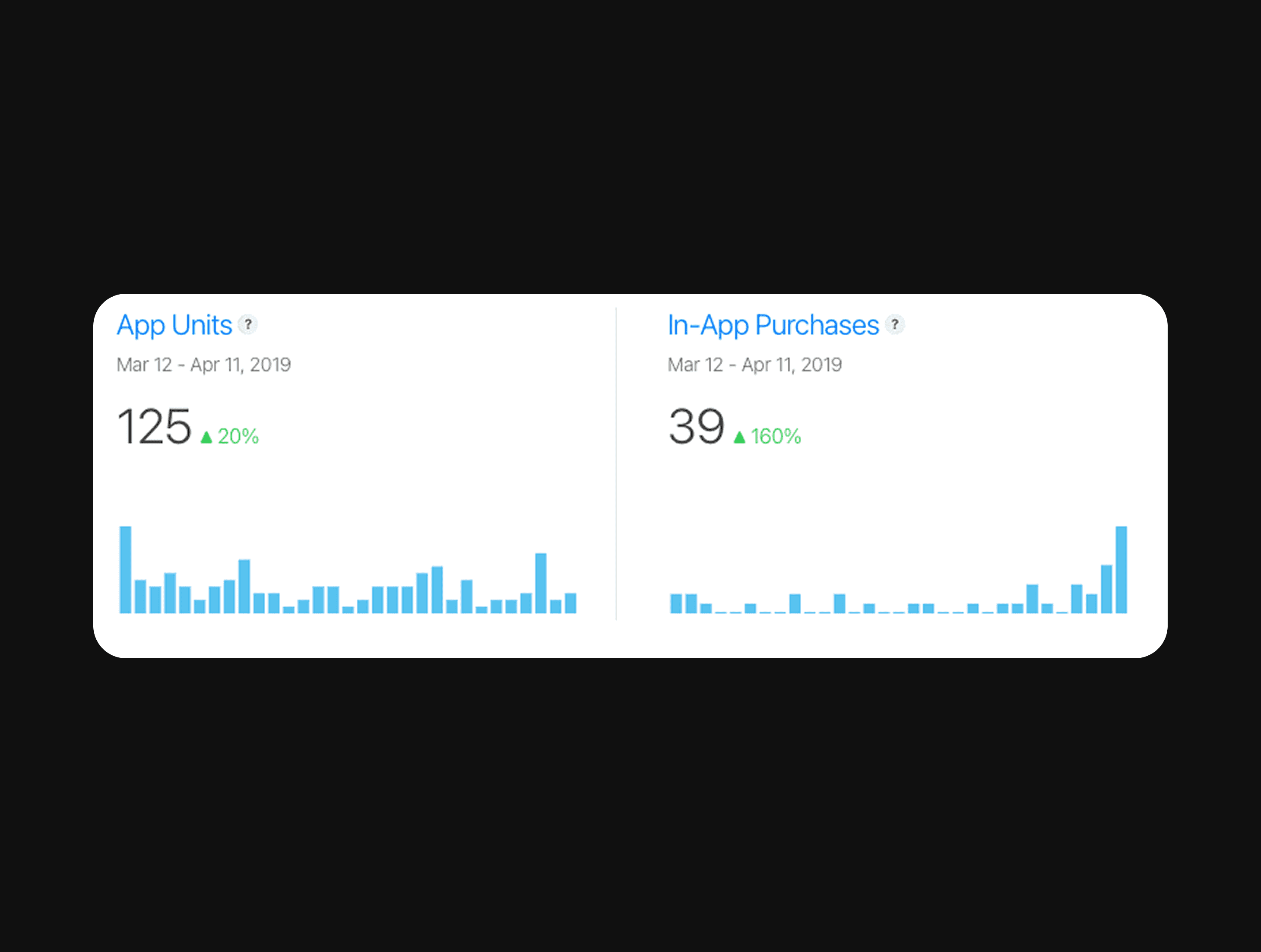
Sales Tracker’s beta launch was a success — colleagues quickly adopted it, management promoted it internally, and a free 30-day trial helped gather valuable feedback for improvements.
Impact 2
Finding My Why
Born from real needs, Sales Tracker still sees active use today — and the project sparked my passion for UX/UI design by showing the impact of solving real problems through technology.
Team
Tiago A. (Translator + Co-founder)
Atekitta (Dev)
Product Strategy, Design, Co-Founder (me)
Learning
Failing
80% of the value users found came from 20% of the app. We tried to solve too many problems at once, and some features got lost. Solving one core problem really well would have made a bigger impact.
Learning
Filter wisely
Listen to your users, but filter feedback. Not every suggestion must be implemented, but every voice should be heard.
Improvement
Polishing
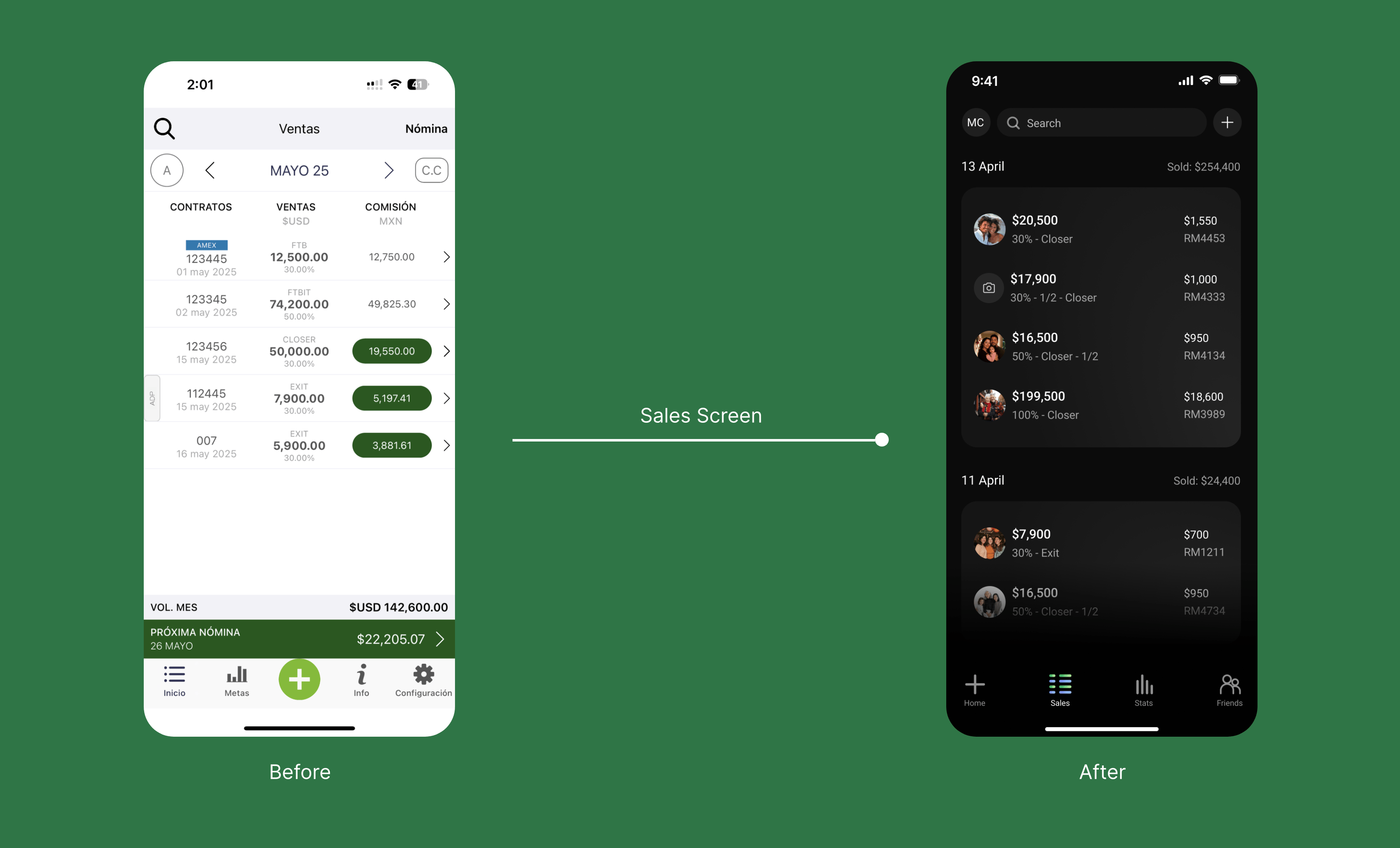
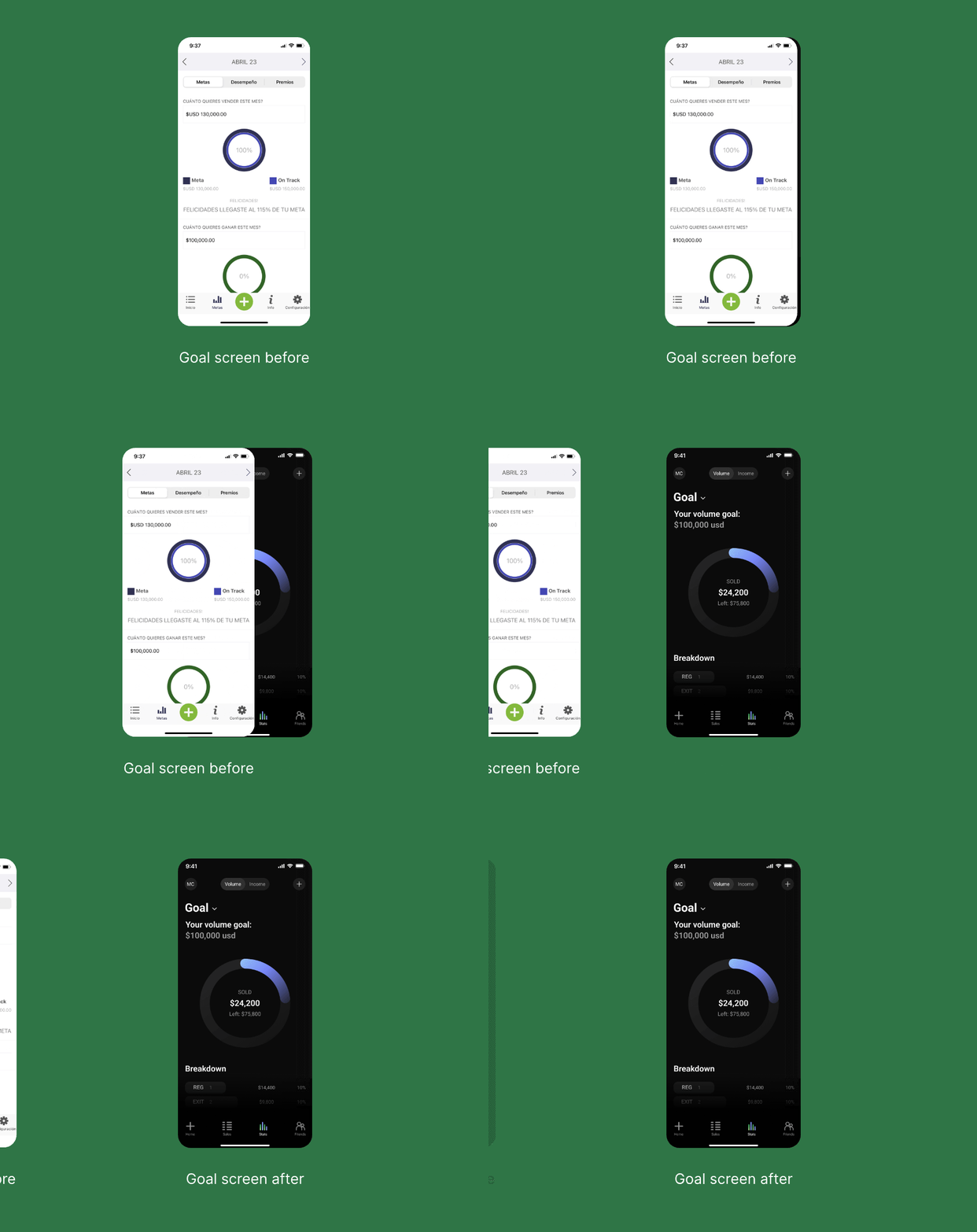
The first version wasn’t perfectly polished — I hadn’t studied UX/UI design yet. But it solved a real problem, and that mattered most. Later, with new skills and user feedback, I redesigned key screens to improve experience.
next project